


In the modern global economy, the ability to maintain a stable micro-environment for temperature-sensitive goods is a critical logistical requirement. Thermal insulation bags, often referred to as insulated shippers or thermal carriers, are engineered containers designed to minimize the transfer of heat between the internal payload and the external environment.
From the "cold chain" logistics of the pharmaceutical industry to the rapidly expanding food delivery sector, these bags represent a sophisticated application of thermodynamics and material science. As of 2026, advancements in phase-change materials and sustainable insulation have further elevated the performance benchmarks for these essential tools.
1. The Core Physics: Mechanisms of Heat Transfer
To understand the efficacy of a thermal insulation bag, one must look at how it combats the three primary methods of heat transfer:
Conduction: This is the transfer of heat through solid materials. Insulated bags utilize low-conductivity materials (insulators) to slow the movement of heat through the walls of the bag.
Convection: This involves the movement of heat through air. High-quality bags use airtight seals and specialized linings to prevent "thermal leakage," where cold air escapes and warm air enters.
Radiation: This is the transfer of heat via electromagnetic waves (such as sunlight). Many thermal bags incorporate a reflective metallic layer (often aluminized polyester) to reflect radiant heat away from the contents.
2. Advanced Material Composition
A professional-grade thermal insulation bag is rarely a single-layer product; rather, it is a multi-layered composite designed for specific thermal resistance (R-values).
The External Shell
The outer layer is typically constructed from heavy-duty, weather-resistant fabrics such as 600D Polyester or Non-woven Polypropylene. These materials are chosen for their durability, puncture resistance, and ability to withstand the mechanical stresses of transport.
The Insulating Core
The "heart" of the bag is the insulation layer. Common materials include:
Expanded Polyethylene (EPE) Foam: A closed-cell foam that offers excellent moisture resistance and cushioning.
Polyurethane (PU) Foam: Provides superior thermal retention but is less flexible than EPE.
Aerogel Linings: Emerging in high-end medical applications, aerogels provide maximum insulation with minimal thickness.
The Reflective Inner Lining
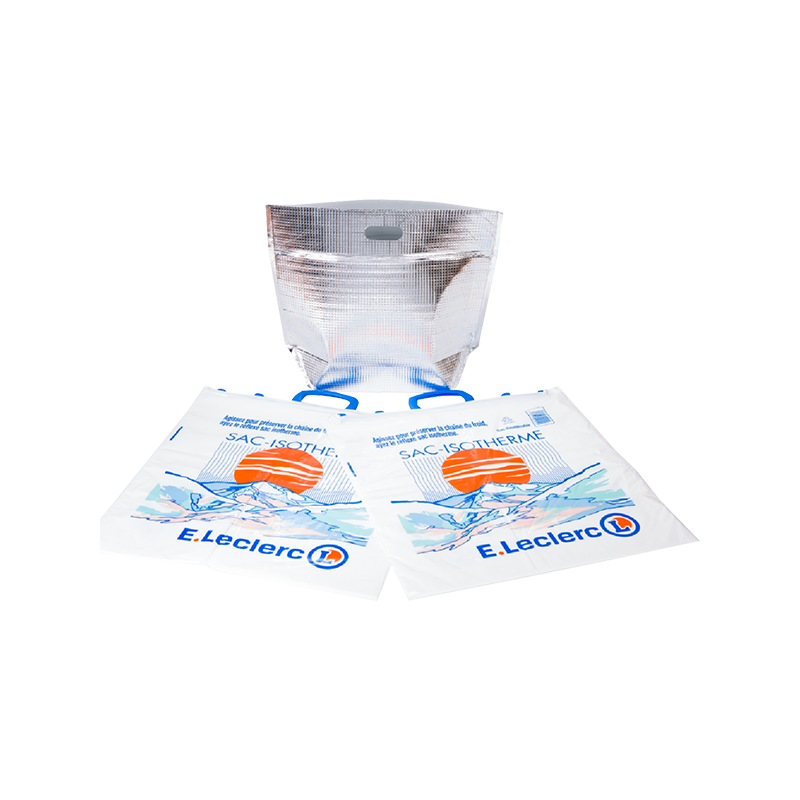
The interior is usually lined with Biaxially-oriented Polyethylene Terephthalate (BoPET) or food-grade aluminum foil. These surfaces are easy to sanitize and provide the critical reflective barrier against radiant heat.
3. Key Applications Across Industries
The Pharmaceutical Cold Chain
Thermal bags are vital for the transport of vaccines, biologics, and insulin. In these instances, "excursions" (deviations from a strict temperature range, such as 2–8∘C) can render the cargo useless. Professional medical thermal bags are often validated to maintain specific temperatures for 24 to 72 hours when paired with gel packs or dry ice.
Perishable Food Logistics
With the rise of "Quick Commerce" and meal-kit subscriptions, thermal bags have become the primary touchpoint for food safety. They ensure that frozen goods remain below 0∘C and hot meals stay above 60∘C, preventing the growth of foodborne pathogens during the "last mile" of delivery.
Industrial and Laboratory Use
Labs use these carriers to transport biological samples or temperature-sensitive chemicals between facilities, ensuring that the integrity of the research or diagnostic test is not compromised by ambient temperature fluctuations.
4. Design Features for Professional Performance
To achieve "professional" status, an insulation bag must move beyond basic foam and foil. Key design elements include:
Airtight Zippers and Overlapping Flaps: Standard zippers are a major source of thermal loss. Professional bags use waterproof/airtight zippers or "hook-and-loop" systems with heavy insulation overlaps to create a true thermal seal.
Vapor Barriers: These prevent condensation from forming within the insulation layers, which can lead to mold growth and a decrease in the material's R-value over time.
Reinforced Load-Bearing Points: Since temperature-sensitive items (like liquids or ice packs) can be heavy, handles and straps are typically cross-stitched and reinforced to prevent failure during transit.
5. The Move Toward Sustainability
In 2026, the industry is seeing a massive shift away from single-use plastics toward sustainable thermal solutions.
Recycled Materials: Many shells are now made from RPET (recycled plastic bottles).
Bio-based Insulation: New insulators made from sheep’s wool, cellulose (recycled paper), or hemp are gaining traction. These materials are often compostable and offer thermal properties comparable to synthetic foams.
Reusability Cycles: Companies are increasingly adopting "Circular Logistics" models, where high-durability thermal bags are tracked via RFID tags, collected after delivery, sanitized, and reused hundreds of times.
Conclusion
Thermal insulation bags are a critical component of the modern infrastructure that keeps our food safe and our medicines effective. By leveraging the principles of thermodynamics through advanced multi-layer construction, these containers bridge the gap between production and consumption. As material science continues to evolve, we can expect these bags to become even thinner, more efficient, and significantly more sustainable, further solidifying their role in global logistics.

Loading comments...