

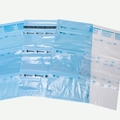
Non-Sterile Blue Sponge Counter Bags: A Surgical Safety Buyer's Guide
by Specimen Transport Bags
Entries 1
Page 1 of 1
In the modern global economy, the ability to maintain a stable micro-environment for temperature-sensitive goods is a critical logistical requirement. Thermal insulation bags, often referred to ...
Book Description
Retained surgical items are among the most preventable complications in the operating room, and surgical sponges account for the majority of reported cases. A single miscounted sponge can result in serious patient harm, extended hospital stays, litigation, and lasting reputational damage for the surgical team and facility involved. The systems used to count, contain, and verify sponges throughout a procedure are therefore not peripheral supplies — they are a frontline patient safety tool, and the quality of those systems matters in direct proportion to the stakes.
Non-sterile blue sponge counter bags have become the standard solution for structured surgical sponge management in operating rooms and procedure suites worldwide. For OR procurement managers, clinical supply chain buyers, and hospital materials managers evaluating sponge counting systems, this guide covers why the format works, what to look for when specifying, and how to ensure the product you source meets both clinical and regulatory expectations.
Why Surgical Sponge Counting Errors Happen — and How Counter Bags Address the Root Cause
Most retained sponge incidents do not result from carelessness. They result from system failures: an informal counting method that relies entirely on memory and verbal confirmation, a workspace that makes it difficult to visually distinguish used sponges from instruments or draping, or a counting sequence that is interrupted during a complex procedure and not reliably resumed. The traditional one-pocket/one-sponge counting method — where sponges are placed individually into separate pockets without a structured multi-sponge tracking framework — provides a degree of containment but limited systemic protection against miscounts at higher sponge volumes.
Sponge counter bags address this at the structural level by creating a visible, organized record of every sponge removed from the surgical field. The clear polyethylene pockets allow every sponge to be seen without opening the bag, which means the count can be verified visually at any point during the procedure by any member of the surgical team. The blue color of the bag provides an immediate visual contrast against both the clinical white and stainless steel of the OR environment and against the white or off-white color of most surgical gauze sponges, making it immediately apparent whether pockets are occupied or empty. This combination of visual organization and instant accessibility transforms sponge counting from a verbal memory exercise into a verifiable physical record.
Understanding the AORN Framework and Why Compliance Matters
The Association of periOperative Registered Nurses (AORN) publishes recommended practices for the prevention of retained surgical items, and sponge management systems are explicitly addressed within that framework. Facilities that demonstrate compliance with AORN guidelines are better positioned for accreditation reviews, risk management assessments, and legal defense in the event of an adverse outcome.
Our non-sterile blue sponge counter bags are designed to comply with AORN recommended practices, providing OR teams with a sponge management tool that aligns with the professional standards their facility is expected to uphold. The multi-pocket structure of the bag represents a material improvement over the traditional one-pocket/one-sponge counting method that AORN guidance has moved away from in favor of more systematic, high-capacity approaches. For procurement teams working with clinical quality or infection control committees to standardize sponge counting procedures across an OR suite or multi-site hospital system, AORN alignment is a meaningful specification criterion that streamlines the approval process.
Product Architecture: What the System Consists Of
Understanding the full system — bag and dispenser together — is important when specifying for OR use, because the two components are designed to work in combination rather than independently.
The counter bag itself is a continuous format clear polyethylene bag with multiple pockets and divided seals. The clear film provides full visibility of contained sponges without requiring the bag to be opened, which preserves containment integrity while allowing real-time visual verification. The bag is non-sterile, as it is used to collect sponges that have already been deployed in the surgical field and are therefore no longer sterile — this is the clinically appropriate specification for the application, and it keeps unit cost at a level that supports single-use disposable practice rather than reprocessing.
The coated steel sponge counter dispenser rack is designed to mount on an IV pole or wall, keeping the counter bag secure, accessible, and consistently positioned within the surgical team’s line of sight throughout the procedure. The rack accommodates five pockets and features divided seals designed to hold either five lap sponges or ten 4x4 sponges — covering the two most common sponge formats in general surgery, gynecology, orthopedics, and other high-volume OR applications. The rack mounts to IV pole model XOD50511 (sold separately), and buyers specifying the system should confirm rack compatibility with their existing IV pole inventory during the procurement process.
The “Non-Sterile” Designation: Clarifying a Commonly Misunderstood Specification
The non-sterile designation occasionally raises questions among clinical buyers who are accustomed to specifying medical products to sterile standards. It is worth clarifying why non-sterile is the correct specification for this particular application.
Sponge counter bags are used to collect and contain surgical sponges after they have been used in the operative field. At the point of collection, those sponges are already contaminated with the patient’s body fluids — they are not and cannot be sterile, and the bag containing them does not need to be sterile in order to fulfill its function. Specifying sterile packaging for a product used to collect non-sterile waste would add cost and manufacturing complexity without delivering any clinical benefit. The non-sterile specification is not a quality shortcut — it is the clinically appropriate and economically correct specification for this application.
What does matter for non-sterile medical supplies used in the OR environment is that the product is manufactured under quality management systems that ensure consistent material quality, dimensional accuracy, and absence of contaminants or particulates that could compromise the surgical environment. This is addressed through supplier certification rather than through sterile manufacturing requirements.
Fluid Management: An Underappreciated Function of Sponge Counter Bags
Beyond sponge counting, the containment function of sponge counter bags serves a secondary but clinically significant purpose: reducing direct body fluid contact for OR staff during the sponge counting and disposal process. Used surgical sponges can contain significant volumes of blood and other body fluids, and handling them without containment creates both a contamination risk for staff and a biohazard waste management challenge at the end of the procedure.
The clear polyethylene pockets of the counter bag allow sponges to be placed and retained without staff needing to handle them directly after initial placement. The bag also provides a contained unit for disposal, simplifying end-of-procedure biohazard waste handling and reducing the risk of fluid spill or staff exposure during transport from OR to waste disposal. For facilities tracking blood loss and fluid absorption as part of surgical monitoring protocols, the contained and visually accessible sponge record provided by the counter bag also supports more accurate intraoperative fluid assessment.
Sourcing Considerations for Hospital and Healthcare System Procurement
Hospital procurement for OR supplies operates under a different set of constraints than commercial retail purchasing. Supplier qualification requirements are more rigorous, vendor approval processes are longer, and the consequences of supply chain disruption — an OR running out of a critical safety supply mid-procedure — are unacceptable. Procurement teams therefore need to assess not just the product specification but the supplier’s manufacturing reliability, quality management credentials, and capacity to support consistent, on-time delivery at the volumes a multi-OR facility or healthcare system requires.
Huayue Group holds FDA certification, ISO 9001 quality management accreditation, BRC Packaging Materials certification, BSCI audit approval, and Sedex SMETA 4-Pillar audit status across its manufacturing operations in China and Cambodia. For healthcare procurement teams working through hospital GPO frameworks or conducting independent vendor qualification, this certification portfolio provides the documentation foundation that most institutional approval processes require. The group has been manufacturing medical packaging alongside food, retail, and e-commerce packaging solutions since 1998, with approximately 800 employees across production, R&D, and commercial functions and distribution to customers in more than 50 countries.
What to Specify When Placing Orders
For procurement teams placing initial or repeat orders for non-sterile blue sponge counter bags, a complete specification should confirm the pocket count and divided seal configuration, the sponge sizes the bag is designed to accommodate (lap sponges versus 4x4 gauze), compatibility with the dispenser rack and IV pole system in use at your facility, packaging quantity per case for inventory planning, and any custom labeling or lot traceability requirements your facility’s materials management system requires.
Custom logo and graphic options are available for institutional buyers who require facility-specific labeling on medical packaging, and custom packaging configurations can be discussed for high-volume healthcare system procurement.
To request samples, submit a specification inquiry, or discuss volume pricing for our non-sterile blue sponge counter bags, visit our medical packaging product range at or contact our team directly.
https://www.huayuepack.com/product/medical-packaging/non-sterile-blue-sponge-counter-bag.html
