


What Is a Bearing?
A bearing is a machine element used to locate, support, and guide the relative motion between a shaft and other components.
Its primary functions are to:
Reduce friction
Support radial and/or axial loads
Ensure accurate positioning of rotating parts
Improve efficiency and service life of mechanical systems
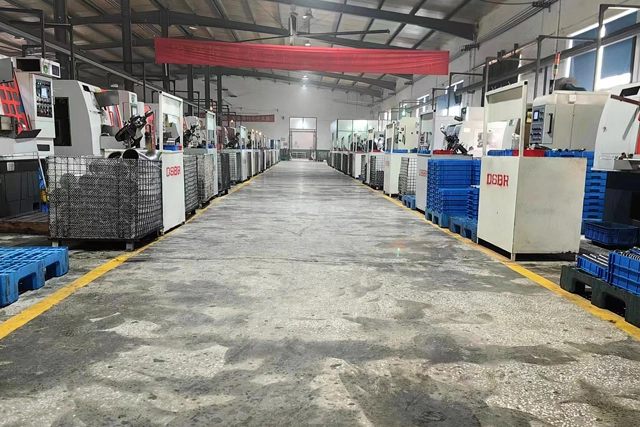
At DSBR Bearings, this definition is not only theoretical. It is the starting point of how bearings are designed, manufactured, and tested for real working conditions.
Bearings are widely used in automotive systems, industrial machinery, mining equipment, gearboxes, electric motors, and heavy-duty applications, where reliability and service life are critical.
Types of Bearings
Bearings are generally classified into two main categories:
Rolling Bearings
A rolling bearing is a bearing in which rolling elements move between load-carrying parts.
It consists of bearing rings with raceways and rolling element assemblies, with or without cages or guiding elements.
Rolling bearings can support:
Radial loads
Axial loads
Combined radial and axial loads
Basic Components of a Rolling Bearing
A typical rolling bearing consists of four main parts:
Outer ring
Inner ring
Rolling elements (balls or rollers)
Cage (retainer)
These components work together to provide low-friction, stable, and reliable motion.
Plain Bearings (Sliding Bearings)
A plain bearing operates solely under sliding friction, without rolling elements.
They are commonly used in applications with:
Very heavy loads
Low speeds
Oscillating motion
Classification of Rolling Bearings by Structure
Classification by Load Direction or Nominal Contact Angle
Nominal contact angle:
The angle between the normal line at the contact point between the rolling element and raceway, and a plane perpendicular to the bearing axis.
(1) Radial Bearings
Radial bearings are mainly designed to carry radial loads.
Their nominal contact angle ranges from 0° to 45°.
They are further divided into:
1) Radial contact bearings
Nominal contact angle: 0°
2) Angular contact radial bearings
Nominal contact angle: 0°–45°
(2) Thrust Bearings
Thrust bearings are mainly designed to carry axial loads.
Their nominal contact angle ranges from 45° to 90°.
They include:
1) Axial contact bearings
Nominal contact angle: 90°
2) Angular contact thrust bearings
Nominal contact angle: greater than 45° but less than 90°
Classification by Type of Rolling Element
(1) Ball Bearings
Rolling elements are balls.
Ball bearings include:
Deep groove ball bearings (α = 0°)
Self-aligning ball bearings
Angular contact ball bearings (0° < α < 45°)
(2) Roller Bearings
Rolling elements are rollers.
Roller bearings include:
Cylindrical roller bearings
Needle roller bearings
Tapered roller bearings
Spherical roller bearings
Classification by Self-Aligning Capability
1) Self-aligning bearings
Feature spherical raceways
Can accommodate shaft misalignment and angular deviation
2) Non-self-aligning bearings (rigid bearings)
Cannot compensate for misalignment
Classification by Number of Rolling Element Rows
1) Single-row bearings
One row of rolling elements
2) Double-row bearings
Two rows of rolling elements
3) Multi-row bearings
Three or more rows (e.g., three-row or four-row bearings)
Classification by Separability of Components
1) Separable bearings
Bearing components can be mounted or dismounted separately
2) Non-separable bearings
Bearing rings cannot be separated freely after assembly
Additional Structural Variations
Bearings may also differ by structural features such as:
Presence or absence of filling slots
Inner ring or outer ring flanges
Ring shapes
Flange structures
Presence or absence of cages
These variations result in many specialized bearing designs.
Composite Bearings and Bearing Units
Composite Bearings
A composite bearing is formed by combining different types of bearings to meet special operating requirements.
Bearing Units
A bearing unit is a functional assembly that uses a bearing as the core component and integrates other functional parts, such as:
Housings
Seals
Mounting elements
Bearing units simplify installation and improve reliability.
Classification of Rolling Bearings by Size
Based on nominal outer diameter, rolling bearings are classified as:
Miniature bearings: ≤ 26 mm
Small bearings: 28–55 mm
Medium-small bearings: 60–115 mm
Medium-large bearings: 120–190 mm
Large bearings: 200–430 mm
Extra-large bearings: ≥ 440 mm
Bearing Type Codes (Examples)
Code Bearing Type
0 (6) Double-row angular contact ball bearing
1 (1) Self-aligning ball bearing
2 (3) Spherical roller bearing
2 (9) Thrust spherical roller bearing
3 (7) Tapered roller bearing
4 (0) Double-row deep groove ball bearing
5 (8) Thrust bearing / Double-direction thrust bearing
6 (0) Deep groove ball bearing
7 (6) Angular contact ball bearing
8 (9) Thrust cylindrical roller bearing
N (2) Cylindrical roller bearing (outer ring without flange)
Why Proper Bearing Selection Matters
Choosing the right bearing is critical for:
Load capacity
Service life
Noise and vibration performance
Maintenance cost
Overall system reliability
Understanding bearing structure, classification, and operating principles allows engineers and buyers to select bearings that match real working conditions, rather than relying on price alone.
Understanding bearing structure and classification allows engineers to select specific components, such as a 7805 bearing, that match real working conditions rather than relying on price alone.
Conclusion
Rolling bearings are essential components in modern mechanical systems.
Understanding bearing structure, classification, and application principles is key to achieving long-term performance and reliability.
As a professional auto bearings manufacturer, DSBR Bearings combines manufacturing expertise, strict quality control, and application-oriented engineering to support customers worldwide.
Whether for heavy-duty industrial use or precision automotive applications, the goal remains the same:
reliable performance, consistent quality, and long service life.
As an auto bearing factory, we will do our best to meet all the needs of customers.
If you want to know more kinds of double row angular contact ball bearings, please visit our website.

Loading comments...