


Real-Time Betting: How Live Odds Turn Sports Into a Second-by-Second Strategy Game
by CourtneyThompson
Book Description
Real-time betting (also called live or in-play betting) is the moment when sport stops being a “before the whistle” prediction and becomes a fast, reactive game of reading momentum, statistics, and psychology while the action unfolds—something many players first explore through platforms like mega-paribd.com because the entire idea only truly clicks when you see live markets updating in front of you and you’re forced to decide in seconds, not hours, whether a match is actually changing or just feels like it is.
A decade ago, most bets were “set and forget.” You studied the teams, picked an outcome, placed the wager, and then watched the match hoping you were right. Real-time betting flipped that script. Now you can enter a game late, change your position, hedge, or focus on micro-events: the next goal, the next corner, the next map winner in esports, the next break point in tennis. It’s thrilling—but it’s also a completely different skill set than pre-match betting.
Live markets are built on movement: pace changes, injuries, substitutions, tactical shifts, weather, crowd pressure, fatigue. Odds don’t simply drift randomly; they respond to information. The bettor’s job is to interpret that information faster (and more accurately) than the market does, or at least spot moments when the market overreacts.
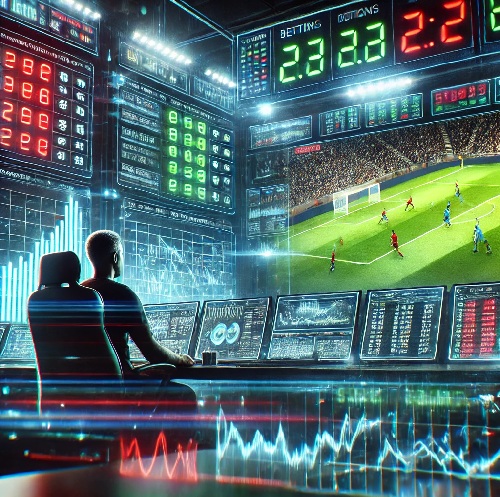
That sounds glamorous, but real-time betting is also where many people lose discipline. Because you can always place “just one more” bet, live betting can become a loop of chasing losses and reacting emotionally. So the most interesting part of this topic isn’t only how live odds work—it’s how to use them without letting them use you.
In this article, we’ll break down what real-time betting really is, why odds move, which sports and markets are most “readable,” how to build a practical live strategy, what mistakes destroy bankrolls, and how to choose a platform experience that actually supports fast decision-making.
Main Part
1) What “Real-Time Betting” Actually Means (and Why It Feels So Different)
Real-time betting is wagering while the event is in progress. The key difference isn’t the timing—it’s the feedback loop.
Pre-match betting is mostly about forecasting: comparing team strength, form, schedules, injuries, motivation, matchups, and pricing. Live betting is about diagnosis: identifying what is happening right now and whether it’s sustainable.
That shift changes everything:
Information arrives in bursts. A red card, a timeout, a tactical switch, a star player injury—each can cause an instant odds shock.
Markets are constantly repriced. The same “winner” market you saw five minutes ago may have a completely different value now.
Time itself becomes a variable. A 1–0 lead in the 12th minute is not the same as a 1–0 lead in the 82nd.
Decision speed matters. If you need ten minutes to feel confident, the value may be gone.
Live betting is closer to trading than to traditional wagering. It rewards calm interpretation and punishes impulsive clicks.
2) How Live Odds Move: The Three Engines Behind the Numbers
To bet well in real time, you need a mental model for why odds change. Most movement comes from three forces:
A) Score and time (the obvious engine)
When a team scores, the win probability changes. As time runs out, the team that’s ahead becomes more likely to win. This is the “mathematical core” of pricing.
B) Game state (the hidden engine)
Not all 0–0 games are equal. A match where one team has 70% possession, 8 shots on target, and constant pressure is different from a slow stalemate. Live odds respond to this through stats feeds, risk models, and sometimes manual adjustments.
C) Public behavior (the emotional engine)
This is where opportunity can appear. Crowds love favorites. Crowds chase momentum. Crowds overreact to a near miss or a highlight. If a platform notices one-sided action, prices can shade slightly to manage risk. This doesn’t mean “the market is wrong,” but it means prices can overshoot in emotional moments.
A skilled live bettor asks:
“Did the probability truly change—or did perception change faster than reality?”
3) The Best Sports for Real-Time Betting (and Why)
Some sports are naturally suited to live betting because they produce frequent, interpretable “signals.”
Football (soccer):
Great for reading tactics, tempo, and fatigue. Markets like next goal, totals, corners, and cards are popular. The challenge: goals are rare, so randomness is high. You must avoid overvaluing short bursts of pressure.
Basketball:
Constant scoring creates smoother probability curves. You can track foul trouble, rotations, pace, and shot quality. The challenge: odds adjust quickly, and comebacks are common—so you need to respect variance.
Tennis:
A dream for disciplined live bettors because it’s a sequence of repeatable situations: serve advantage, break points, momentum swings, medical timeouts. The challenge: psychological shifts are real, but hard to measure. Also, one “tilt” can reverse everything.
Esports:
Maps, rounds, economy systems (in some titles), and tactical timeouts can create clear turning points. The challenge: if you don’t understand the game deeply, you’re betting blind.
Baseball / Hockey:
Lower scoring means every key moment matters. The challenge: thin margins, and a single mistake can decide the game.
If you’re newer to live betting, pick a sport where you can explain why the next ten minutes will look different from the previous ten. If you can’t explain it, you’re reacting, not analyzing.
4) Market Types in Live Betting: Where Skill Can Show Up
Real-time platforms often offer dozens of markets during a match. Not all are equal.
Winner / Moneyline (live):
Simple, but often efficient. Best used for hedging, scalping, or when you identify a misread game state (like a superior team temporarily behind due to an unlucky goal).
Totals (Over/Under):
One of the most strategic live markets. Totals are sensitive to tempo, substitutions, and scoreline incentives. Example: a team down 1–0 in the second half often pushes forward, changing chance volume.
Handicaps / Spreads:
Useful when you believe the current margin is misleading (e.g., a basketball team leads by 12 but shot unsustainably well from three, and the opponent is generating better looks).
Next goal / next point / next round:
High variance, high adrenaline, high danger. Can be profitable if you understand the “setup” (pressure, matchups, fatigue) but punishes impulsive bets.
Props (corners, cards, player stats):
These can be softer if you track match dynamics carefully. But be honest: if you’re not watching the match (or at least the full live stats), props can be a trap.
A practical rule:
If a market resolves quickly, it feels exciting—but it usually carries more randomness.
If a market resolves slowly, it demands patience—but it may reward analysis more.
5) A Real Strategy for Live Betting: “Pre-Plan, Then React”
Most losing live bettors do the same thing: they open a match with no plan and place bets to “make the viewing experience interesting.” That’s entertainment, not strategy.
A better approach is a two-layer method:
Layer 1: Pre-game blueprint
Before the match starts, write a tiny plan—literally 3–5 bullet points:
Which team has the fitness advantage late?
Who is likely to dominate territory?
What substitutions could change the game?
What scorelines cause tactical shifts?
What live markets are you willing to touch (and which you will ignore)?
This isn’t about predicting the final score. It’s about anticipating how the game could change.
Layer 2: Live triggers
During the match, you only act when a trigger happens:
A key player looks injured or limited
A team changes formation
A red card or foul trouble appears
Tempo jumps (or collapses)
The underdog’s early lead is built on low-quality chances
A team is forced to chase the game earlier than expected
With triggers, you’re not betting every five minutes. You’re waiting for moments when the match becomes “different enough” to justify a price change—and you’re checking if the odds changed appropriately.
6) The Psychology of Live Betting: Why People Blow Up Their Bankrolls
Real-time betting amplifies common cognitive traps:
Recency bias:
“What just happened” feels more important than it truly is. A team misses two chances, and you assume a goal is guaranteed next. But football punishes that assumption constantly.
Tilt and revenge betting:
A bad beat feels personal, so the next bet becomes emotional, not rational. Live markets make revenge betting easy because there’s always another option.
Overconfidence from small samples:
A team dominates for 8 minutes, and you conclude they will dominate for 80. In many sports, dominance is cyclical.
The illusion of control:
Because you’re watching live, it feels like you have more control. But watching is not the same as modeling. You can still be wrong—just faster.
The cure is boring but powerful:
Pre-define stake sizes
Limit the number of live bets per match
Pause after a loss (even 2–3 minutes helps)
Never place a bet because you’re “due”
If you want live betting to stay fun and sustainable, discipline is not optional—it’s the entire game.
7) Speed, Streams, and Latency: The Technical Side Most People Ignore
Live betting isn’t only about sports knowledge. It’s also about timing.
Stream delay: Many broadcasts are delayed by 10–45 seconds. If you’re watching a delayed stream, odds may move before you see why. That can lead to “mysterious” suspensions or sudden price jumps.
Market suspensions: When a dangerous attack happens or a key point is in play, markets can suspend briefly. That’s normal risk control, not a conspiracy.
Stat feed differences: Some platforms rely heavily on data providers. If the feed updates possession, shots, or points faster, the odds adjust faster.
This matters because it changes your expectations. If you’re always late, you’ll feel like the market is unbeatable. If your approach depends on being first, latency will punish you. Better strategies don’t require you to “race” the market—they rely on interpretation, not milliseconds.
8) Managing Risk in Real Time: A Bankroll System That Actually Works
A common live-betting mistake is raising stakes as confidence rises—right when volatility is highest.
A stable approach looks like this:
Use flat staking as your default.
Pick a unit size (for example, 1% of bankroll) and stick to it. Live betting’s emotional spikes make flat staking safer than “feels-based” staking.
Separate “analysis bets” from “entertainment bets.”
If you enjoy small fun bets, budget them separately so they can’t sabotage your serious bankroll.
Hedge only when it improves the expected outcome, not your nerves.
Hedging can be smart (locking profit, reducing exposure), but nervous hedging can reduce long-term value.
Stop-loss per match.
A simple rule like “max 3 units lost per match” can prevent tilt spirals.
Live betting rewards patience. Your goal is not to win every match—it’s to avoid the big emotional mistakes that erase weeks of good decisions.
9) Where Mega-Pari-BD Fits Into the Live Betting Experience (2 paragraphs)
When people talk about live betting, they usually describe the idea—fast odds, shifting markets, instant decisions—but the day-to-day experience depends heavily on the platform’s design. Mega-Pari-BD positions itself as a modern international destination that combines a sportsbook environment with online casino entertainment under one roof, and that “all-in-one” approach matters because many players prefer to switch between live sports and other real-time formats without juggling multiple accounts or interfaces. A clean layout, consistent navigation, and a mobile-friendly build can make a practical difference in live betting, where a cluttered screen or slow market load can turn a good read into a missed opportunity.
Another point that tends to attract attention is the platform’s breadth. Mega-Pari-BD is presented as offering a large library of games alongside a wide sports line, meaning users who enjoy variety can explore different formats—slots, table games, live-dealer style play, and sports markets—depending on mood and time. For real-time bettors specifically, features like smooth performance across devices, transaction security, responsive payouts, and round-the-clock support contribute to confidence: when decisions happen quickly, you want the surrounding “infrastructure” (payments, stability, and help when needed) to feel just as dependable as your match reading.
10) Building Your Personal Live-Betting Checklist
If you want a simple framework that makes you look smarter than 90% of impulsive live bettors, use this checklist before every click:
What changed? (score, injury, tactics, fatigue, foul trouble, substitution)
Is the change real or temporary? (a short surge vs. a structural shift)
What does the team need now? (protect lead, chase equalizer, slow tempo)
Does the price reflect the change correctly? (overreaction or underreaction)
What is my exit plan? (hold to end, hedge later, stop-loss if wrong)
Is this within my allowed markets and stake size? (discipline rule)
If you can’t answer at least 4 of these in one minute, you probably shouldn’t bet that moment.
11) Examples of “Readable” Live Situations (Without Overpromising)
To keep things realistic, here are common live patterns that can be actionable—if you understand the sport:
A favorite concedes early but is clearly controlling the match (football): the market may swing too far, especially if the goal came from a single counterattack.
A basketball team leads big while shooting unsustainably from deep: if the shot quality is poor and the opponent is creating better looks, regression can pull the score back.
A tennis player’s first-serve percentage collapses: if it’s tied to visible discomfort or fatigue, the change may persist; if it’s just a brief wobble, odds may overreact.
Esports economy or composition shift: one round can flip momentum, but only if it changes the strategic landscape, not just the score.
Notice what’s missing: promises of “easy profit.” The value in live betting isn’t a magic pattern—it’s consistent thinking under pressure.
Real-time betting is exciting because it turns sports into a moving puzzle. But it’s also dangerous for the same reason: the market never stops offering you a new decision, and your emotions never stop trying to steer your hand.
If you take one thing from this article, let it be this: live betting isn’t about betting more—it’s about betting better moments. The best live bettors don’t chase every swing. They plan, watch, wait, and strike only when the match meaningfully changes and the odds don’t fully reflect that change.
Start with one sport you understand, limit your markets, keep stakes boring, and build a trigger-based approach that protects you from impulse. Do that, and real-time betting stops being a chaotic casino-like rush and becomes what it’s meant to be: a sharp, engaging way to interact with sport—second by second, decision by decision, with your head leading your heart.
